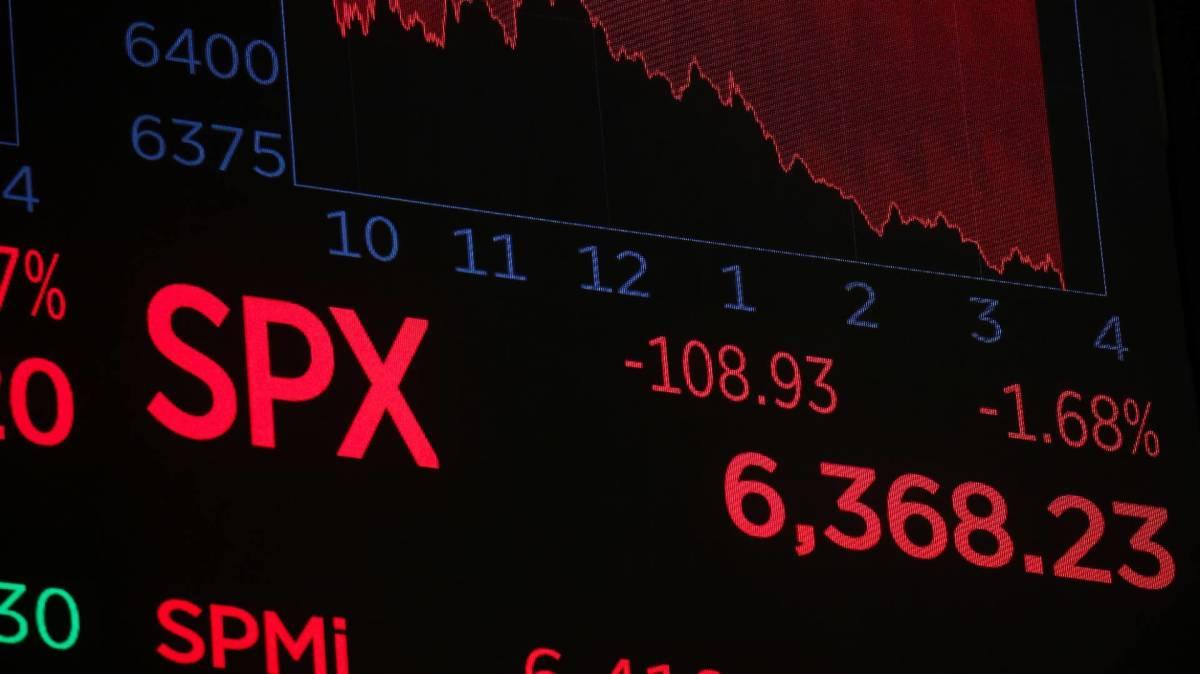
April 7th marks the 39th day of the Middle East chaos since the attacks began on February 28th. Escalation has intensified, with President Trump lately threatening to destroy Iranian infrastructure if a deal is not reached. The conflict has seen Kharg Island struck, oil prices surge, and widespread attacks on Iran.
The S&P 500 has been mostly bearish since then, and just like everybody else, Wall Street is starting to adjust.
After weeks of volatility driven by rising oil prices and geopolitical tensions, the S&P 500 is now trading around 6,563 as of writing, according to Yahoo Finance. But beneath the surface, everybody is asking whether the market is stabilizing or just bracing for more pressure ahead.
One major Wall Street firm has just made its stance clear. UBS Global Wealth Management has lowered its outlook for the S&P 500, warning that elevated energy prices could weigh on growth and delay interest-rate cuts.
“Higher energy prices are likely to modestly weigh on economic growth and keep inflation pressures firmer at the margin,” UBS said, according to a report from Reuters.
At the same time, another top strategist believes the worst of the recent correction may already be behind us. But the debate is not about whether we are continuing lower or recovering. It’s about how high it can get in 2026, based on what has been happening lately.
UBS cuts S&P 500 target as oil prices raise economic concerns
UBS is taking a more cautious stance on the market, and the reason comes down to oil. In a note dated April 6, the firm trimmed its year-end S&P 500 target to 7,500 from 7,700, while lowering its mid-year forecast to 7,000 from 7,300.
UBS expects the conflict to wind down in the coming weeks, which would gradually ease energy supply constraints. However, bringing oil production back to pre-conflict levels will take time, potentially keeping prices elevated.
Related: Morgan Stanley says it’s “time to buy” California-based tech giant
Since the war began, the S&P 500 has fallen roughly 4%, as investors pulled back amid rising geopolitical risks. According to UBS, elevated oil prices could slow economic growth, keep inflation higher for longer, and possibly delay rate cuts from the Federal Reserve.
That last point matters the most. Why? UBS now expects two 25-basis-point rate cuts in September and December. According to Reuters, that’s a delay from its earlier forecast for June and September. In other words, the path to easier monetary policy just got longer.
Michael Nagle/Bloomberg via Getty Images
Oil shock may linger even if Middle East tensions ease
There is some good news, at least on the surface. UBS expects the Middle East conflict to gradually wind down in the coming weeks, allowing energy flows to resume.
But here’s something you should know. Restoring oil production to pre-conflict levels could take much longer due to infrastructure damage and supply disruptions.
That means oil prices could stay elevated even after tensions cool. And that creates a tricky environment for markets.
More Oil and Gas:
- The world’s biggest gas field matters just as much as oil right now
- Goldman Sachs reveals top oil stocks to buy for 2026
- U.S. economy will show resilience, despite rising oil prices
Higher oil prices don’t just affect energy companies. There is more. They impact consumer spending, transportation costs, and corporate margins. Still, UBS isn’t turning bearish on stocks. UBS maintained its 2026 earnings forecast for the S&P 500 at $310 per share and continues to view U.S. equities as “attractive.”
Why? Because once the geopolitical pressure fades, solid profit growth, a still-supportive Fed, and a continued adoption of artificial intelligence (AI) could re-emerge. So while the near-term outlook looks uncertain, the longer-term picture remains constructive.
Morgan Stanley also sees the S&P 500 correction nearing its end
Interestingly, Morgan Stanley is telling a story that backs up the S&P 500 recovering to 7,000. Strategist Mike Wilson believes the recent correction may already be in its final stage.
What’s driving that view? More than half of the stocks in the Russell 3000 are down over 20% from their highs. That’s a sign that much of the damage has already been done.
Related: Morgan Stanley analyst sends urgent S&P 500 message
At the same time, valuations have reset significantly, with the S&P 500’s price-to-earnings ratio dropping sharply. Wilson argues this resembles past “growth scares” that did not lead to a recession.
Even the oil shock, he notes, is less severe than in previous cycles that triggered economic downturns. So is the market already pricing in the worst-case scenario? Morgan Stanley seems to think so.
S&P 500 also recovers after five-week drop
Recent market action adds another layer to the story. After five straight weeks of losses, the S&P 500 just snapped its losing streak with a strong 3.4% weekly gain, closing around 6,611 on the week ended April 6th, 2026.
The rally was driven by:
- Optimism around a potential de-escalation in the conflict
- Oversold technical conditions
- Broad-based sector strength
Technology, financials, and energy stocks all participated in the rebound. That’s a sign that investor confidence may be stabilizing.
Looking at the charts, there are early signs of improvement. The S&P 500 recently broke above a key resistance level around 6,550. That’s a move that signals a shift in momentum. That breakout came after a clean rejection near the 6,300 level, suggesting strong buying interest around the level.
Trading View
So, here’s what you can watch next:
- Holding above 6,550 could confirm a recovery trend
- Failure to hold could trigger another pullback
- A retest and clear rejection at the 6,550 support is another confluence to go longs
In short, the market is at a key level you should keep an eye on.
Related: Citigroup holds firm on S&P 500 target despite Iran tensions
