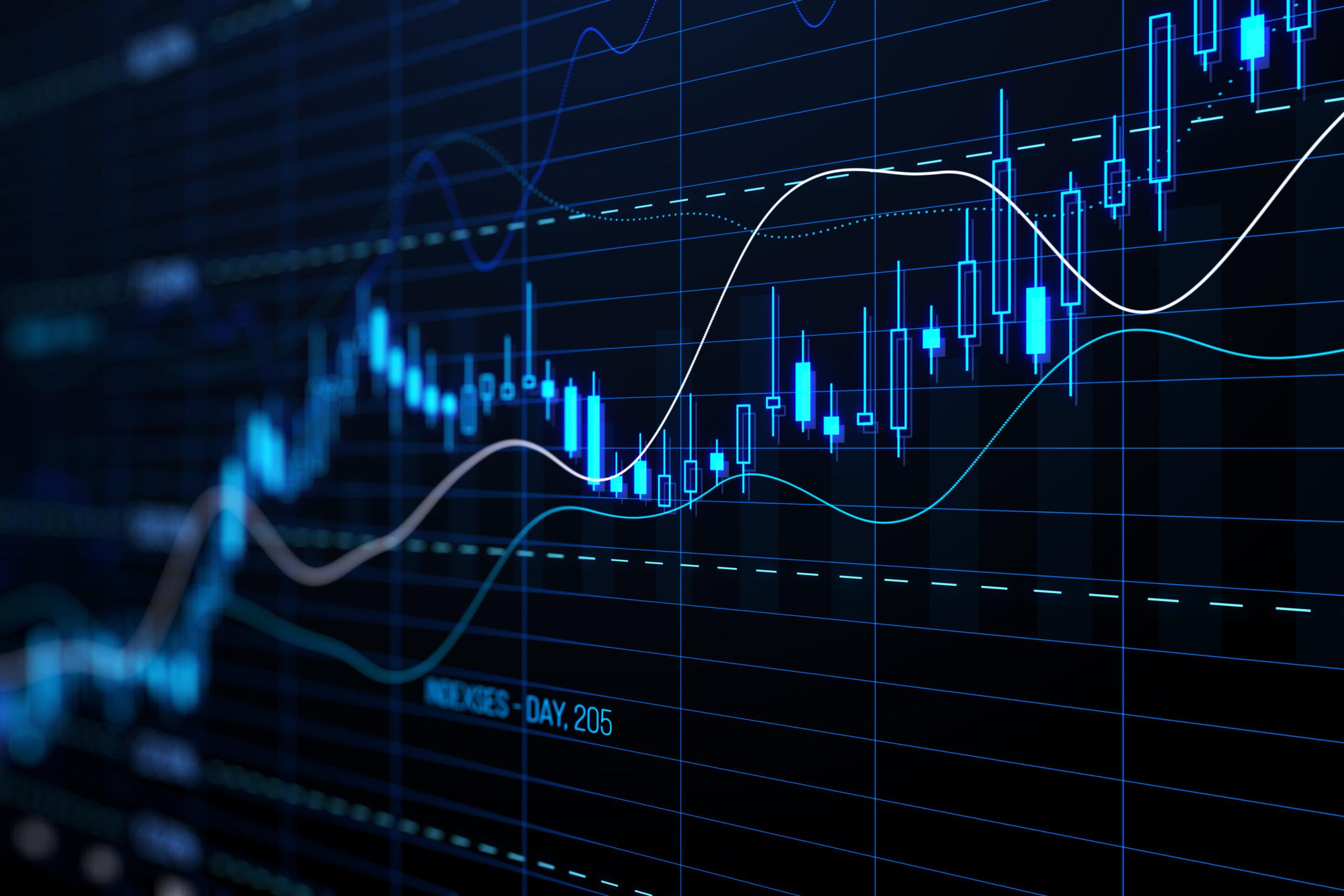
Finding current cryptocurrency prices is often as easy as looking them up on an exchange platform that supports them, but understanding what those prices mean, how they got to be where they’re at, and where they’re going are different skills altogether.
Trading in both traditional and crypto markets involves a healthy amount of technical analysis. Crypto is unique, however, in that it’s significantly more difficult to accurately predict its future value due to its inherent volatility. While traders have gotten somewhat better at finding patterns using tools like crypto charts over time, crypto markets remain a challenge to navigate for both new traders and traders who only have experience with traditional markets.
Fortunately, like anything, using tools like crypto charts is a skill, and all skills can be improved with enough time, effort, and patience. Scanning crypto charts is just one part among many of actually performing technical analysis, but learning how to read them makes for a good first step in understanding the broader process.
What are Crypto Charts?
Crypto charts are, broadly, visual representations of price movements for certain cryptocurrencies over a set period of time. These charts give traders and investors a substantial amount of the data they need to analyze market trends and identify patterns that could be used to inform later decisions. With cryptocurrency now having existed for over 15 years, crypto charts have accumulated enough historical price behavior to be useful in that regard as well.
By examining crypto charts, traders may be able to gauge market sentiment and forecast potential price movements based on those insights. There are a variety of chart types available, many of which differ in how they represent data and the kinds of data they represent. As such, it’s often helpful to get acclimated with multiple chart types to determine firsthand which ones you understand and prefer using most.
Chart Types: Line Charts
Among the three most commonly used crypto charts—line, bar, and candlestick—line charts are often considered the easiest to read and understand. In practice, they simply display a line that connects successive closing prices, i.e., selling prices, over a specified period of time. These charts are typically used to briefly examine the overall trend for a given cryptocurrency.
Line charts see more use when looking at long-term trends rather than short-term ones since the lines they feature tend to lack fine details. They’re useful for determining whether a trend is positive or negative, but because they lack detail, they aren’t always helpful when it comes to predicting changes that might take place the next day.
As is the case for the other charts, line charts consist of three components: x- and y-axes, time frames, and price movements. The x-axis, which is usually at the bottom of a graph, runs horizontally and is used to represent time. The time frame determines how much time the x-axis portrays: a year, a month, a week, etc.
The vertical y-axis, used to depict price movements, can be on either the left or right side of a graph. Price movements simply depict whether there was more crypto being bought or sold at a given point in time. Buying pressure pushes a trend upward, while selling pressure pushes it down.
Chart Types: Bar Charts
Bar charts can be used to examine long-term trends like line charts, but unlike line charts, they provide more details concerning the open, close, high, and low prices for each time period. The height of a bar shows its price range during a given period, while horizontal ticks represent opening and closing prices.
Where line graphs are best used when examining long-term trends, bar charts are more useful in the short term. Experts note that “Bar charts are useful when traders need to see the range of price movements within a specific time frame, such as intraday trading. They help traders identify potential reversal points and the strength of price movements.” Additionally, traders can examine the length and position of a series of bars to gauge market momentum.
Traders often overlay both bar and line charts with volume indicators to measure how much of a cryptocurrency was traded during a specific period. Low volume suggests little buying or selling was happening at a specific time, whereas high volume shows the opposite. Many traders use volume as a signal to determine whether price movements are taking place due to genuine interest in a certain price point or a lack thereof.
Chart Types: Candlestick Charts
Candlestick charts are a favorite among many traders due to how much information they can provide. These charts are similar to bar charts in that each candle shows the open, close, high, and low prices for a time period. The key difference is in the distinction between the body and the wick of a given candlestick. While the body of a candlestick represents differences between a time period’s open and close prices, the wicks indicate the highest and lowest prices.
Traders often use candlestick charts to identify potential patterns found in recent price action. These patterns can sometimes be used to predict future market movements, particularly in the short term. This property makes them well-liked among day traders and swing traders.
There’s Always More to Learn
Trading and investing in crypto remains quite the challenge, even for those with experience doing so. Line, bar, and candlestick charts are some of the most popular out there, but there are a great many tools beyond those charts worth learning about. For example, many traders overlay charts with indicators such as moving averages (MA), relative strength index (RSI), and the moving average convergence divergence (MACD) to identify factors such as price momentum, speed, and change.
For many people, the best way to learn is by doing. In this context, that means looking at charts to make predictions and see whether they’re proven right. Whether you’re right or wrong, it’s good to determine why that is so you can express better judgment in the future. If you decide to use actual crypto for this kind of practice, be prepared to lose it.
The act of looking at a chart alone likely won’t be comprehensive enough to be able to make any informed trading decisions, but everyone has to start somewhere, even if that somewhere is a single line on a graph.
